
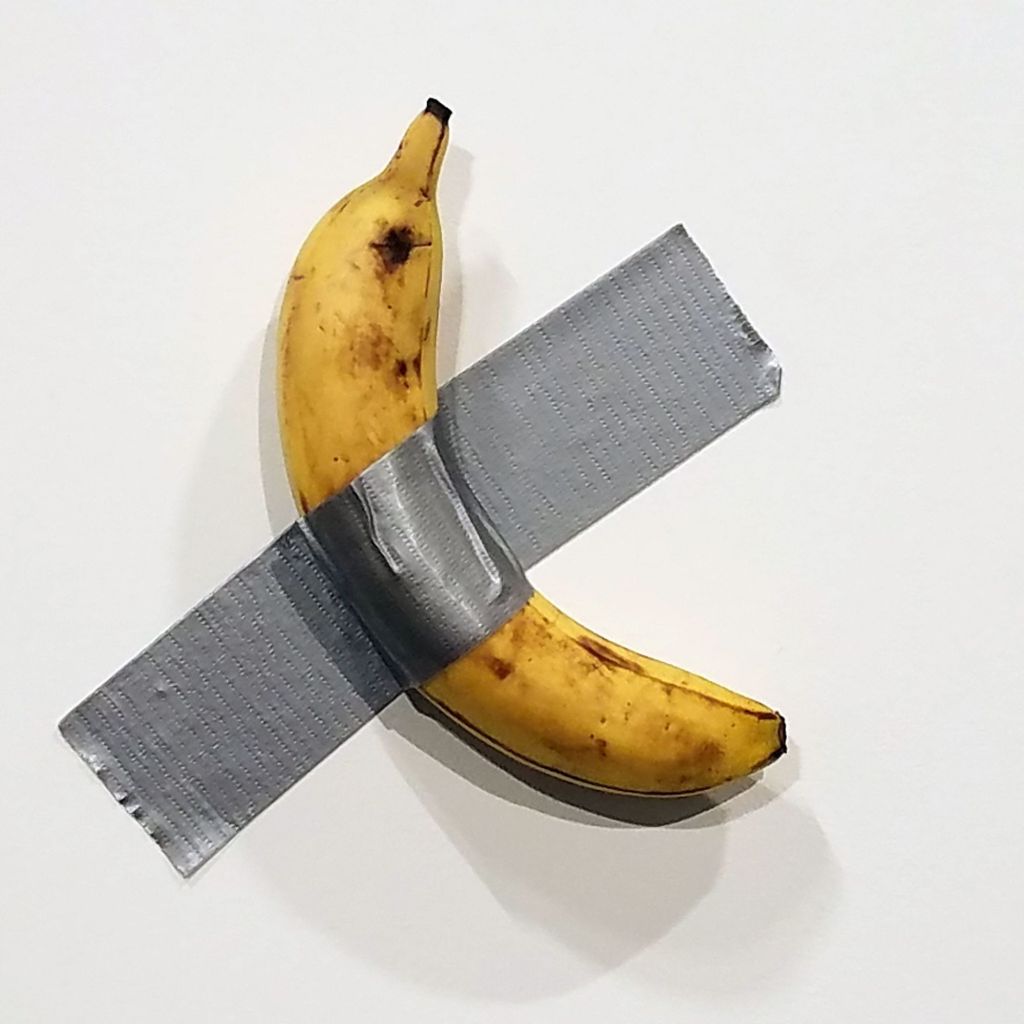
Art once had the power to speak truth to power, to reflect the struggles of humanity, and to challenge us to think beyond ourselves. But in today’s world, art has been corrupted by the forces of capitalism, transforming into a hollow spectacle—an empty symbol of wealth, vanity, and apathy. Just a few days ago, a banana duct-taped to a wall was sold for $6.24 million at a New York auction. Yes, a banana. It’s as absurd as it is heartbreaking, but it’s also the clearest sign yet that the art world, like the rest of humanity, has lost its way.
A World Where Greed Reigns Supreme
This banana wasn’t valuable because of its message, its craftsmanship, or the emotions it might evoke. It was valuable because rich people wanted it. It’s not about art anymore—it’s about status, about using money to create an illusion of meaning. When something as inconsequential as a piece of fruit can command millions, it’s clear that the forces controlling this world care more about who owns what than about what truly matters.
And in a world where wealth is the only thing that seems to matter, the cries of the suffering are drowned out. The people of Gaza, whose lives are being destroyed by unrelenting violence, are a testament to humanity’s failure. The genocide unfolding before our eyes barely makes the news, and when it does, it’s often met with silence or indifference. Children are dying, families are being torn apart, and yet the world remains passive. The same rich elites who spend millions on a banana are the ones who continue to turn a blind eye to the atrocities unfolding in Gaza. Or may even have a hand in it.
Capitalism’s Deadly Grip on Our Humanity
The banana may seem like a joke, but it’s a reflection of a much darker truth: our world has become so numb to suffering that we now elevate absurdity and excess above human life. This is the legacy of unchecked capitalism, where everything—including art, beauty, and life itself—has a price tag. The same system that allows a banana to be sold for millions also keeps people starving, suffering, and dying in war zones. In this world, the value of human life is less important than the size of your bank account or the name of your art piece.
While the rich throw their money around on things like golden toilets and duct-taped fruit, entire populations are being wiped out, and yet the response is always the same: apathy. No amount of wealth, no amount of art, can fill the void left by human suffering. The lack of empathy for the people of Gaza, for those enduring violence and loss, is a moral failure of the highest order. This isn’t just an abstract crisis—it’s a genocide happening right now, and the world watches as if it’s some kind of distant tragedy that has nothing to do with them.
The True Meaning of Art: Human Connection and Empathy
True art is not found in expensive, meaningless objects. It’s not in the banana or the golden toilet or the empty spectacle of the rich. True art is in the small, everyday moments that connect us all—the moments when we SEE each other, when we stand up for what is right, show compassion to those who are suffering, when we refuse to look away in the face of injustice. True art is the act of being human, of caring for one another, of speaking out when the world tries to silence the voices of the oppressed.
The failure of humanity is not just in the wealth we’ve amassed or the art we’ve commodified—it’s in the apathy we’ve cultivated, the indifference we show to the suffering of others. While billionaires spend millions on frivolous objects, the people of Gaza continue to be wiped off the map, their cries unheard. We have failed them. We have failed each other.
A Call for True Change
We can no longer pretend that the art world or the world at large is detached from the genocide in Gaza. The same systems that turn art into a commodity also perpetuate violence and inequality. We are complicit when we allow this to happen. It’s time to reject the hollow art of the rich, to reject the empty spectacle of a world that values bananas more than human lives, and to embrace a new kind of art—a kind that fights for justice, that uplifts the suffering, that connects us all in our shared humanity.
If we continue to allow our world to be driven by greed, indifference, and apathy, we risk losing the very essence of what it means to be human. The art we celebrate, the systems we uphold, and the values we champion are a direct reflection of who we are as a species. It’s time for us to ask ourselves: who are we really? And what kind of world do we want to create for our children?

 Somiya Nagem
Leave a comment